Panama Canal Authority Announces Important Changes Affecting Vessel Operations and Transit Planning
The Panama Canal Authority (ACP) has announced significant changes to its transit reservation system, authorized Neopanamax draft limits and long-term booking arrangements for 2026 and 2027.
These developments are particularly relevant to shipping companies operating bulk carriers, container ships, tankers, LNG/LPG carriers and other commercial vessels trading through the Panama Canal.
With new measures taking effect on 15 October 2026 and additional arrangements scheduled for 2027, shipowners and operators should review their voyage planning, loading conditions and applicable technical requirements.
1. New Panama Canal Transit Rules Effective October 2026
Under ACP Advisory A-36-2026, the number of daily Neopanamax booking slots will increase from nine to ten, effective 15 October 2026.
This brings the total number of available daily transit slots across the Neopanamax and Panamax locks to 33.
The revised reservation arrangements also permit customers to obtain multiple slots for the same booking date and reserve consecutive transit dates, subject to the applicable allocation rules.
However, Panama Canal transit availability remains influenced by vessel type, booking priority, water availability and operational restrictions.
2. Updated Neopanamax Draft Restrictions
The ACP has increased the maximum authorized transit draft for the Neopanamax locks to 14.94 metres (49.0 feet) Tropical Fresh Water (TFW), effective from 28 September 2026 until further notice.
Although the Canal’s general maximum allowable Neopanamax draft is 15.24 metres under suitable water-level conditions, the operational limit can be adjusted according to Gatun Lake levels.
For shipowners, these variations can directly influence:
- Maximum cargo intake and deadweight utilization.
- Loading and ballast conditions.
- Vessel trim and draft calculations.
- Commercial voyage planning and transportation costs.
- The feasibility of using the Panama Canal for particular loading conditions.
For bulk carriers and other heavily loaded vessels, even a relatively small reduction in maximum permissible draft can result in a meaningful loss of cargo-carrying capacity.
Consequently, technical evaluation of allowable transit draft and corresponding cargo intake is essential for efficient vessel operation.
3. New Transit Reservation Arrangements for 2027
Through Advisory A-37-2026, the ACP has introduced its long-term slot allocation arrangements for the 2027 dry season, covering transit dates from 3 January to 3 April 2027.
The programme includes the continuation of the Neopanamax Long-Term Slot Allocation (LoTSA) scheme and the introduction of a new pilot programme for vessels transiting the Panamax locks.
The Neopanamax competition is scheduled for 17 November 2026, while the Panamax pilot competition is scheduled for 24 November 2026.
The new arrangements are intended to improve schedule predictability and provide additional opportunities for operators with recurring or fixed itineraries.
Furthermore, effective 15 October 2026, the late-cancellation surcharge rules will change. The applicable cancellation window is reduced from seven days to four days, while the surcharge remains at 250% of the reservation fee under the specified conditions.
Shipowners should consider these developments when planning their vessels’ commercial employment and transit reservations.
4. Technical Compliance: What Should Shipowners Review?
Apart from operational and booking changes, vessels must continue to comply with the technical requirements established under ACP Notice to Shipping N-1-2026 – Vessel Requirements.
Particular attention should be given to the vessel’s principal dimensions, navigation bridge visibility, air draft, mooring and towing arrangements, equipment certification, and stability conditions.
For vessels undergoing modifications, retrofits or structural alterations, an assessment may be necessary to confirm that the proposed configuration remains suitable for Panama Canal transit.
Technical documentation, calculations and drawings may also be required for ACP review and approval.
These technical requirements are separate from the recently announced booking and draft adjustments and should be evaluated according to each vessel’s characteristics.
5. How GROUP NAVALE Can Support Shipowners and Operators
At GROUP NAVALE, we provide specialized naval architecture and marine engineering services to support shipowners, operators and ship managers in assessing vessel suitability for Panama Canal transit.
Our technical capabilities include:
- Panama Canal Technical Compliance Assessment: Review of vessel arrangements against applicable ACP requirements.
- Draft and Loading Condition Assessment: Evaluation of operating drafts, cargo intake limitations, trim, ballast conditions and stability.
- Mooring and Towing Arrangement Review: Assessment of deck fittings, Safe Working Load (SWL), associated supporting structures and reinforcement requirements.
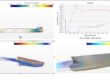
- Structural Engineering and FEM Analysis: Strength calculations for mooring fittings, deck foundations and other structural modifications.
- Technical Drawings and Documentation: Preparation and revision of General Arrangement, mooring plans, structural drawings and other technical submissions.
Our objective is to help shipping companies identify potential technical limitations, evaluate engineering solutions and prepare vessels for safe and efficient operations, while reducing the risk of avoidable compliance-related delays.
GROUP NAVALE provides independent naval architecture and engineering support to shipping companies worldwide, helping them assess operational restrictions and develop practical technical solutions.
For further information or a technical assessment of your fleet, contact our engineering team.